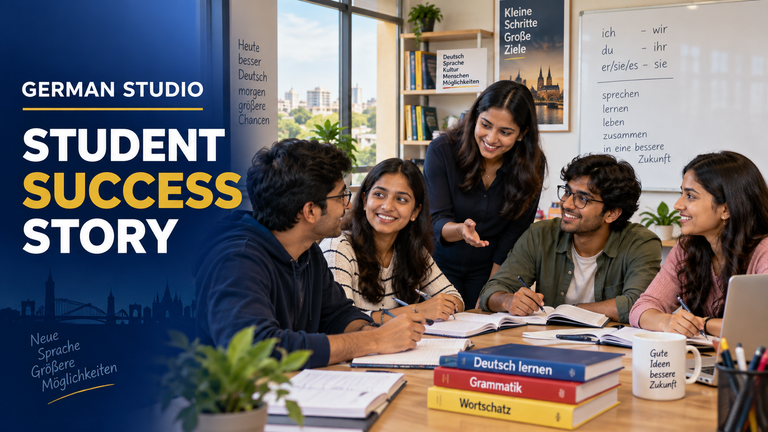
Popular Courses to Study in Germany: Engineering | Management | Humanities & More
Germany has consistently ranked among the top five most popular study destinations in the world, and for good reason. Home to over 400 universities and more than 20,000 study programmes, it offers one of the most diverse and academically rigorous higher education systems on the planet — largely tuition-free at public institutions. For Indian students planning their next academic move, understanding the most in-demand courses to study in Germany is the essential first step toward making the right choice.
Whether your passion lies in building machines, running businesses, understanding human behaviour, or discovering new medicines, Germany has a world-class programme designed for you. This comprehensive guide walks through the most popular courses to study in Germany across every major discipline — covering top universities, career outcomes, language requirements, and what you can realistically earn after graduation.
Why Choosing the Right Course in Germany Matters
Germany’s universities are deeply integrated with its industrial ecosystem. The courses are structured to produce graduates who are job-ready from day one, and many programmes include mandatory internships, research projects, or industry collaboration. Choosing the right courses to study in Germany does not just shape your academic experience — it directly influences your salary, visa eligibility, and long-term immigration prospects.
Additionally, Germany’s Skilled Worker Immigration Act (2023) has made it easier than ever for graduates in shortage occupations to secure work visas and permanent residence. Fields like engineering, data science, healthcare, and management are among the most prioritised.
Overview: Most Popular Courses to Study in Germany
| Discipline | Top Focus Areas | Avg. Tuition (Public Uni) | Career Demand |
|---|---|---|---|
| Engineering | Mechanical, Electrical, Civil, Automotive | €0 – €350/semester | ⭐⭐⭐⭐⭐ |
| Computer Science & IT | Software, AI, Cybersecurity, Data Science | €0 – €350/semester | ⭐⭐⭐⭐⭐ |
| Business & Management | MBA, Finance, Marketing, International Business | €0 – €350/semester | ⭐⭐⭐⭐ |
| Natural Sciences | Physics, Chemistry, Biology, Environmental Science | €0 – €350/semester | ⭐⭐⭐⭐ |
| Medicine & Life Sciences | Medicine, Pharmacy, Biomedical Engineering | €0 – €350/semester | ⭐⭐⭐⭐⭐ |
| Humanities & Social Sciences | Psychology, Sociology, Political Science | €0 – €350/semester | ⭐⭐⭐ |
| Architecture & Design | Urban Planning, Industrial Design, UX | €0 – €350/semester | ⭐⭐⭐⭐ |
| Law & Governance | International Law, EU Law, Public Administration | €0 – €350/semester | ⭐⭐⭐ |
Most public universities in Germany charge only a semester contribution of €150–€350, which typically includes a public transport pass.
1. Engineering — Germany’s Crown Jewel
When most people think of courses to study in Germany, engineering comes to mind first — and with good reason. Germany is the birthplace of the automobile, the diesel engine, and some of the world’s most precise industrial machinery. The country’s engineering reputation is unmatched globally, and its universities consistently appear in world rankings for technical disciplines.
Most In-Demand Engineering Specialisations
Mechanical Engineering Germany’s manufacturing sector employs over 3.5 million people, making mechanical engineering one of the most reliable and high-paying courses to study in Germany. Graduates work in automotive, aerospace, robotics, and precision manufacturing.
Electrical Engineering & Electronics With Germany’s massive push toward renewable energy, smart grids, and electric vehicles, electrical engineers are among the most sought-after professionals in the country. Companies like Siemens, Bosch, and Infineon are hiring at scale.
Civil & Structural Engineering Germany has been investing heavily in infrastructure modernisation — railways, bridges, urban development, and climate-resilient construction. Civil engineering graduates find excellent opportunities in both the private sector and government projects.
Automotive Engineering No other country offers a better environment for automotive engineering studies. Programmes at TU Munich, RWTH Aachen, and KIT are designed in direct collaboration with BMW, Mercedes-Benz, and Volkswagen.
Top Engineering Universities in Germany
| University | Location | Ranking (Engineering) |
|---|---|---|
| Technical University of Munich (TUM) | Munich | Top 10 globally |
| RWTH Aachen University | Aachen | Top 15 globally |
| Karlsruhe Institute of Technology (KIT) | Karlsruhe | Top 20 globally |
| TU Berlin | Berlin | Top 50 globally |
| University of Stuttgart | Stuttgart | Top 100 globally |
Language of Instruction: Most postgraduate engineering programmes are available in English. However, knowing German (B1+) significantly helps with industry internships and job placements.
Average Starting Salary: €45,000 – €60,000 per year for fresh graduates.
2. Computer Science, Data Science & Artificial Intelligence
If engineering is Germany’s traditional strength, technology is its future. Computer science and data science are among the fastest-growing and highest-paying courses to study in Germany right now. Germany’s federal government has committed €3 billion to AI research and development, and universities are scaling up their tech programmes accordingly.
Key Programmes
- M.Sc. Computer Science — covering software engineering, algorithms, distributed systems
- M.Sc. Data Science / Data Engineering — statistics, machine learning, big data pipelines
- M.Sc. Artificial Intelligence — deep learning, computer vision, NLP
- M.Sc. Cybersecurity — network security, cryptography, digital forensics
- M.Sc. Human-Computer Interaction — UX research, cognitive science, interface design
Career Outcomes
Graduates from tech programmes are in extremely high demand. Germany faces a shortage of over 140,000 IT professionals, and this gap is expected to grow through 2030. For Indian students looking at courses to study in Germany, computer science and AI offer the clearest path from graduation to a well-paying job in the shortest time.
Average Starting Salary: €50,000 – €65,000 per year.
Top Employers: SAP, Volkswagen Digital, Zalando, Google Germany, Amazon Web Services, Deutsche Telekom, Siemens Digital Industries.
3. Business Administration & Management
Germany’s position as Europe’s largest economy makes it an outstanding place to study business. MBA and Masters in Management programmes from German institutions are recognised worldwide and increasingly sought after by Indian students who want a European perspective on global business.
Popular Business Programmes
- MBA (Master of Business Administration) — general management, strategy, leadership
- M.Sc. Finance — investment banking, asset management, financial modelling
- M.Sc. International Business — cross-border trade, supply chains, global markets
- M.Sc. Marketing Management — digital marketing, brand strategy, consumer behaviour
- M.Sc. Entrepreneurship & Innovation — startup ecosystems, venture funding, product development
What Sets German Business Degrees Apart
German business schools integrate heavily with the Mittelstand — Germany’s network of mid-sized, globally leading companies that form the backbone of its economy. Students have unparalleled access to internships and projects with companies that are market leaders in their niches globally.
| School | Location | Speciality |
|---|---|---|
| WHU Otto Beisheim School | Düsseldorf / Vallendar | MBA, Finance |
| Frankfurt School of Finance & Management | Frankfurt | Banking, Finance |
| HHL Leipzig Graduate School | Leipzig | Entrepreneurship, General MBA |
| ESMT Berlin | Berlin | Leadership, Technology Management |
| University of Mannheim | Mannheim | Marketing, Economics |
Average Starting Salary (MBA/Masters in Management): €52,000 – €75,000 per year.
4. Natural Sciences — Physics, Chemistry & Environmental Science
Germany is one of the top countries in the world for scientific research output. Its Max Planck Institutes, Fraunhofer Institutes, and university research centres are global leaders in chemistry, physics, biology, and environmental science. Students pursuing courses to study in Germany in the natural sciences gain access to research infrastructure that is rarely matched elsewhere.
Key Programmes:
- M.Sc. Chemistry / Analytical Chemistry
- M.Sc. Physics / Applied Physics
- M.Sc. Environmental Science & Sustainability
- M.Sc. Molecular Biology / Biotechnology
- M.Sc. Renewable Energy & Climate Change
Germany’s Green Deal commitments have made environmental science and renewable energy among the most future-proof courses to study in Germany for students interested in sustainability careers.
5. Medicine & Life Sciences
Medicine is one of the most competitive but also most rewarding courses to study in Germany. Germany’s healthcare system is among the best in the world, and there is a documented shortage of doctors and medical professionals — opening significant opportunities for international graduates.
Key Facts:
- Medical degree (Staatsexamen) takes 6 years; taught primarily in German
- Pharmacy, Biomedical Engineering, and Nursing Science are available in English at postgraduate level
- Biomedical engineering graduates are in very high demand due to Germany’s robust medical device industry (Siemens Healthineers, B. Braun, Fresenius)
Average Starting Salary (Medicine): €55,000 – €70,000 per year after licensing.
6. Humanities & Social Sciences
Often overlooked, humanities and social sciences are some of the most intellectually rich courses to study in Germany. German universities have a long philosophical and social-scientific tradition — home to thinkers like Kant, Hegel, Marx, and Weber.
Popular Programmes:
- M.A. Psychology / Clinical Psychology
- M.A. Political Science / International Relations
- M.A. Sociology / Organisational Studies
- M.A. Media Studies / Journalism
- M.A. Cultural Management / Arts Administration
While salaries in humanities fields are generally lower than engineering or tech, careers in international organisations, NGOs, public policy, diplomacy, and academia offer strong long-term trajectories.
7. Architecture & Design
Germany has a powerful design heritage — the Bauhaus movement that revolutionised modern design was born here. Architecture, industrial design, and UX design programmes at German universities combine theory, craft, and technology in a uniquely German way.
Top Universities: Bauhaus-Universität Weimar, TU Berlin (Architecture), HfG Offenbach, Hochschule Pforzheim.
Career Outlook: Strong demand in sustainable architecture, smart city planning, and digital product design.
How to Choose the Right Course to Study in Germany
Choosing from the thousands of available courses to study in Germany can feel overwhelming. Here is a practical framework to narrow your options:
- Align with your undergraduate background — Most Masters programmes expect a relevant Bachelors degree. An engineering undergraduate will have more options in technical fields; a commerce graduate will find business programmes more accessible.
- Check the language of instruction — While hundreds of programmes are fully in English, some still require German (especially medicine and law). If you have not yet started learning German, this is the time to begin.
- Research university rankings by field — Overall rankings matter less than field-specific ones. TU Munich may rank below LMU for biology, for instance.
- Consider location and industry proximity — Munich for automotive and tech, Frankfurt for finance, Berlin for startups and creative industries, Stuttgart for engineering.
- Look at alumni employment — Check where graduates from your target programme work. University career portals and LinkedIn alumni searches are your best tools.
For personalised guidance on selecting the right courses to study in Germany based on your background, goals, and budget, get in touch with the German Studio team. Our counsellors have helped hundreds of Indian students find and secure the right programme.
For a complete database of all German study programmes available in English, visit the DAAD Programme Database — Germany’s official academic exchange service.
Language Requirements — German vs English Programmes
| Programme Type | German Requirement | English Requirement |
|---|---|---|
| English-taught Masters | Not mandatory (B1 helpful) | IELTS 6.5+ or TOEFL 90+ |
| German-taught Masters | B2 / C1 (TestDaF / DSH) | Not required |
| Medical Degree (Staatsexamen) | C1 mandatory | Not applicable |
| MBA / Business (English) | Not mandatory | IELTS 6.5+ / GMAT |
| PhD / Research (most fields) | Not mandatory | B2 English minimum |
FAQs — Courses to Study in Germany
Q1. Which courses to study in Germany are most in demand for Indian students? Engineering, Computer Science, Data Science, and Business Administration are consistently the most popular among Indian students. These fields combine affordable tuition, strong career outcomes, and visa-friendly post-graduation routes.
Q2. Can I study in Germany without knowing German? Yes. There are thousands of Masters and MBA programmes taught entirely in English. However, learning German to at least B1 level improves your job prospects significantly after graduation.
Q3. What is the cost of studying in Germany? At public universities, tuition is free or minimal (€0–€350 per semester). Private universities charge €5,000–€20,000 per semester. Living costs are approximately €800–€1,200 per month depending on the city.
Q4. Which German university is best for engineering? TU Munich, RWTH Aachen, and KIT (Karlsruhe Institute of Technology) are consistently ranked among the top engineering universities in the world. TU Munich and RWTH Aachen regularly appear in global top-15 engineering rankings.
Q5. How do I apply for courses to study in Germany? Most applications are submitted through the university’s online portal or through Uni-Assist — a centralised application service used by many German universities. You will typically need your Bachelor’s transcripts, a statement of purpose, language certificates, and two letters of recommendation.
Q6. Are there scholarships available for international students in Germany? Yes. The DAAD (German Academic Exchange Service) offers numerous scholarships for Indian students. Other options include the Deutschlandstipendium, Heinrich Böll Foundation scholarships, and Erasmus+ grants for European exchange programmes.
Q7. What GPA or academic score do I need for admission? Most German universities require a minimum GPA equivalent to a German grade of 2.5 or better (roughly 60–65% aggregate or above). Top universities like TU Munich and RWTH Aachen are more competitive and typically look for 70%+ aggregates.
Conclusion
Germany offers a remarkable breadth of high-quality, affordable, and globally respected study programmes across virtually every field. Whether you are drawn to engineering and technology, business and finance, natural sciences, or humanities, the courses to study in Germany cover every academic aspiration — and lead to genuine, well-paying careers in Europe and beyond.
The key is choosing wisely — aligning your programme with your background, career goals, and the language you are prepared to study in. Start learning German early, research programmes thoroughly, and apply to multiple universities to maximise your chances.
If you would like expert guidance on which programmes match your profile and how to build a strong application, reach out to German Studio’s counselling team today. We specialise in helping Indian students find, apply for, and succeed in their German academic journey.